Viewing the Perseid meteor shower
This year, I spent the night of the Perseid meteor shower in the French Vosges mountains, at one of my favorite spots – where the region is exceptionally dark and secluded.
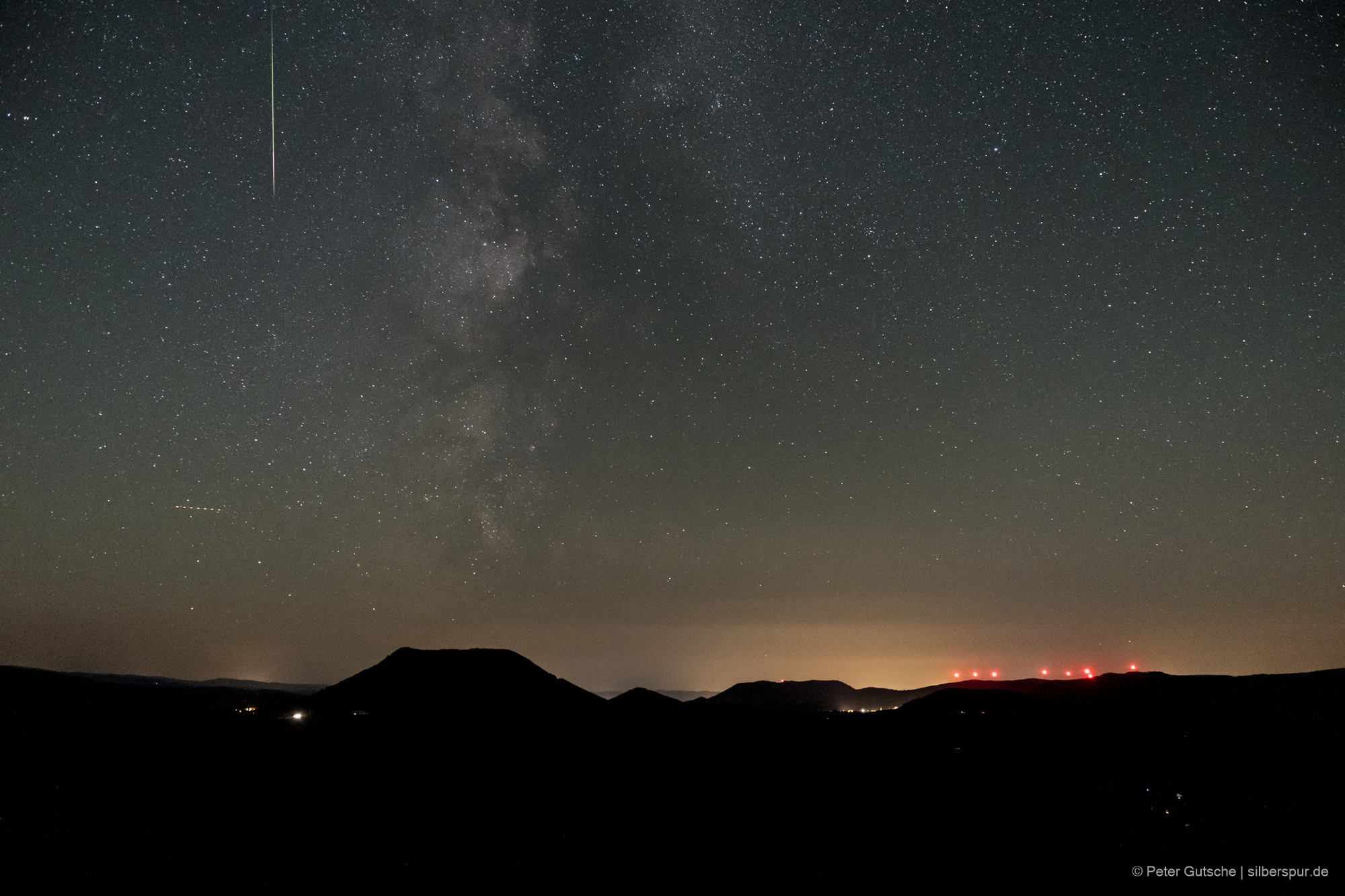
From here, we also look out over a region of remarkable geological history.
From the southern slopes of the Champ du Feu massif, the view opens southward across the region between Saint-Dié-des-Vosges and Sélestat. The focus lies on an ancient fault zone – the Lalaye-Lubine Zone – which marks the boundary between two branches of the Variscan mountain range, formed between 370 and 290 million years ago. (Learn more)
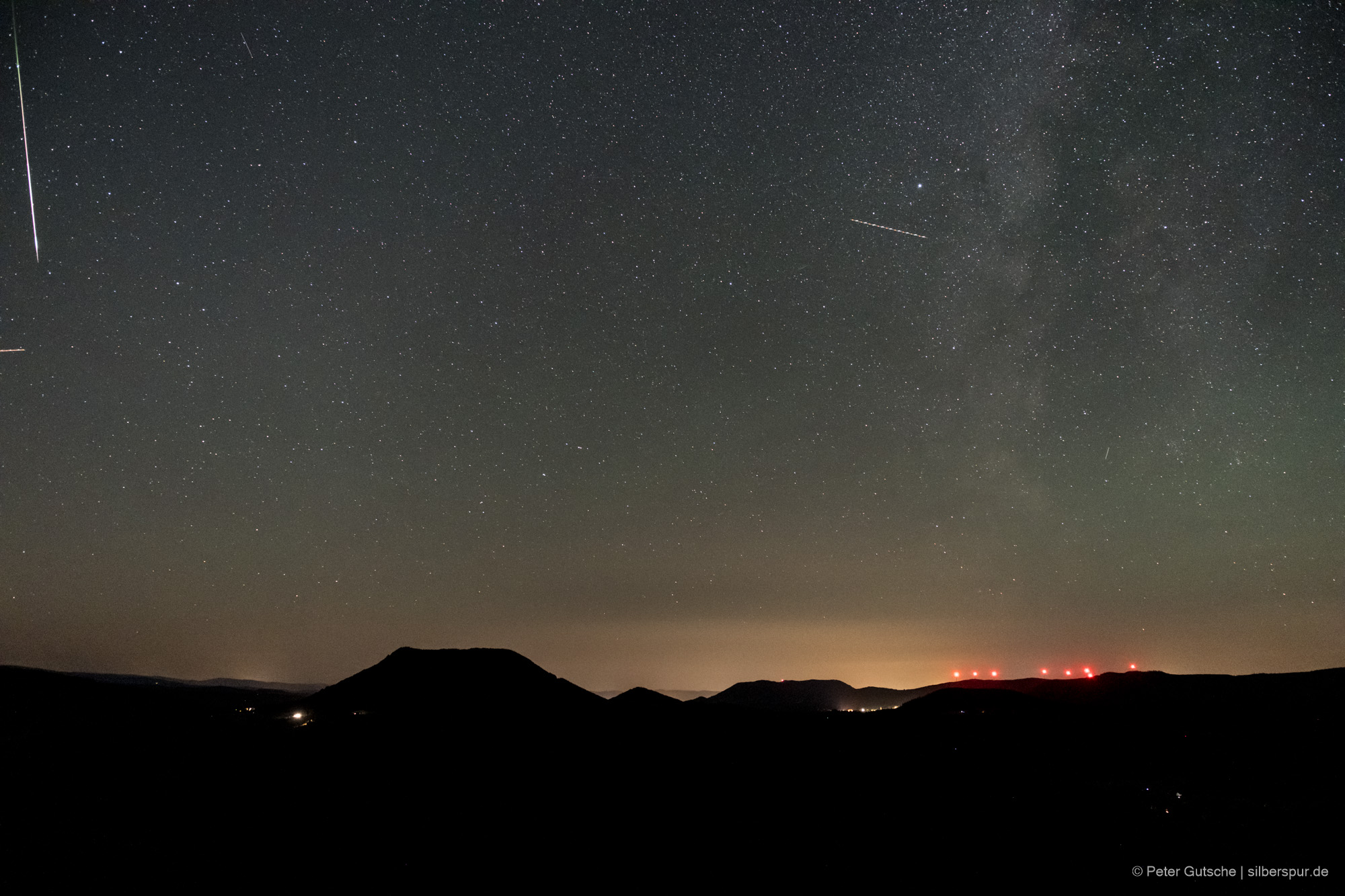
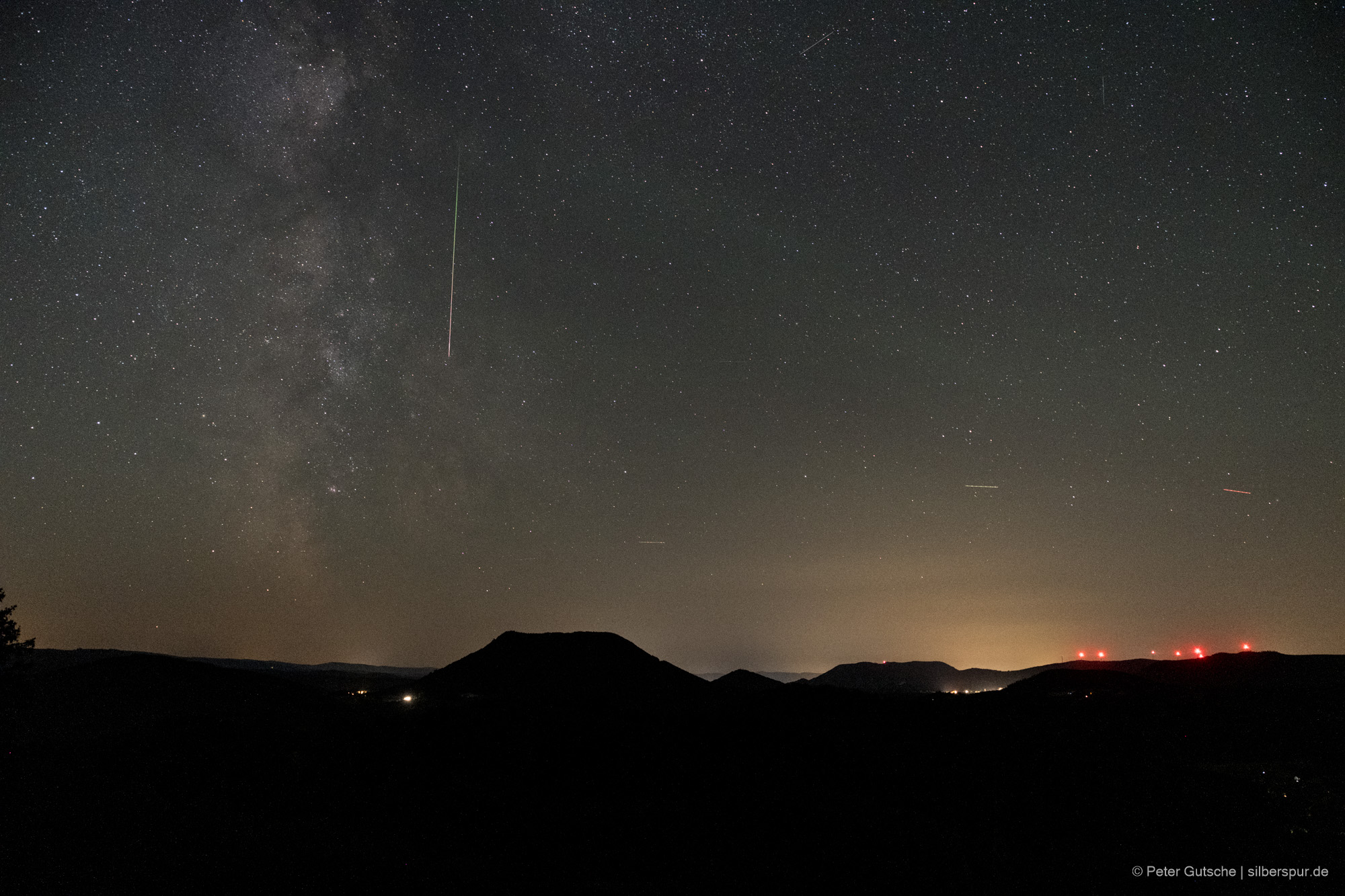
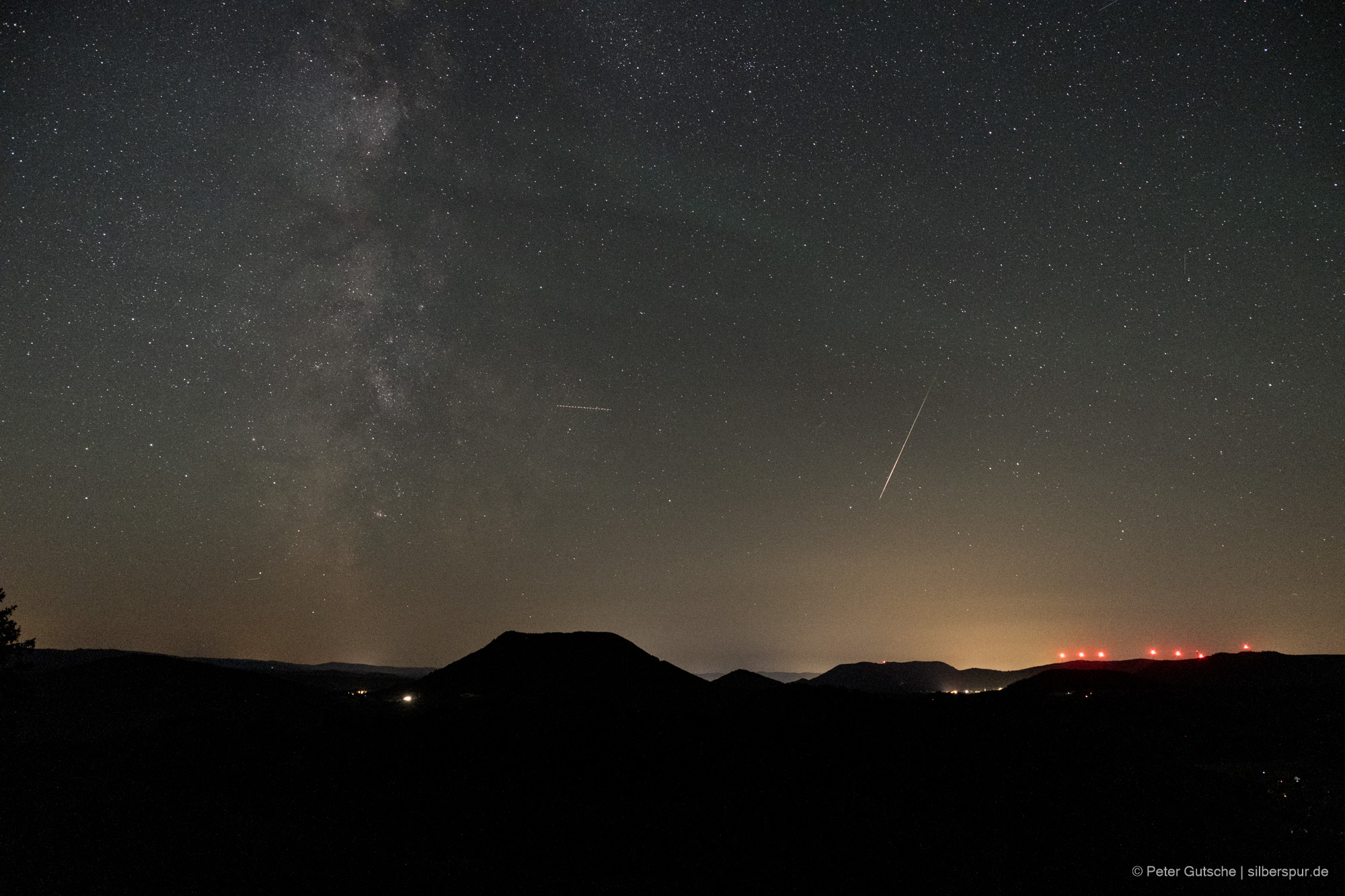
The striking, trapezoid-shaped mountain silhouette is the Climont (1,000 meters above sea level). Its peculiar shape was created by erosion.
From northwest to southeast extends a tectonic fault zone, the Lalaye-Lubine zone, named after two small villages in the region. It is, in a sense, a suture zone between two ancient continents that were welded together after the subduction of an ocean lying between them hundreds of millions of years ago, when the supercontinent Pangaea formed.
The meteors shown on the following pictures are luminous phenomena caused by dust particles from space colliding at high velocity with air molecules in the upper atmosphere. (Learn more)
The following photographs and time-lapse videos were created with the camera oriented towards the south. Therefore, you can clearly see the Milky Way. The meteors come from the north (above in the picture), where the constellation of Perseus has risen.
These are the Perseids, named after the constellation Perseus, from which they appear to radiate. The dust particles are remnants of comet Swift-Tuttle. Every year around August 12, Earth crosses the comet's debris trail on its orbit around the Sun.
All meteors captured in a single image
This image is a composite of individual shots taken during the second half of the night between August 12 and 13, 2026 (01:23–04:08 CEST).
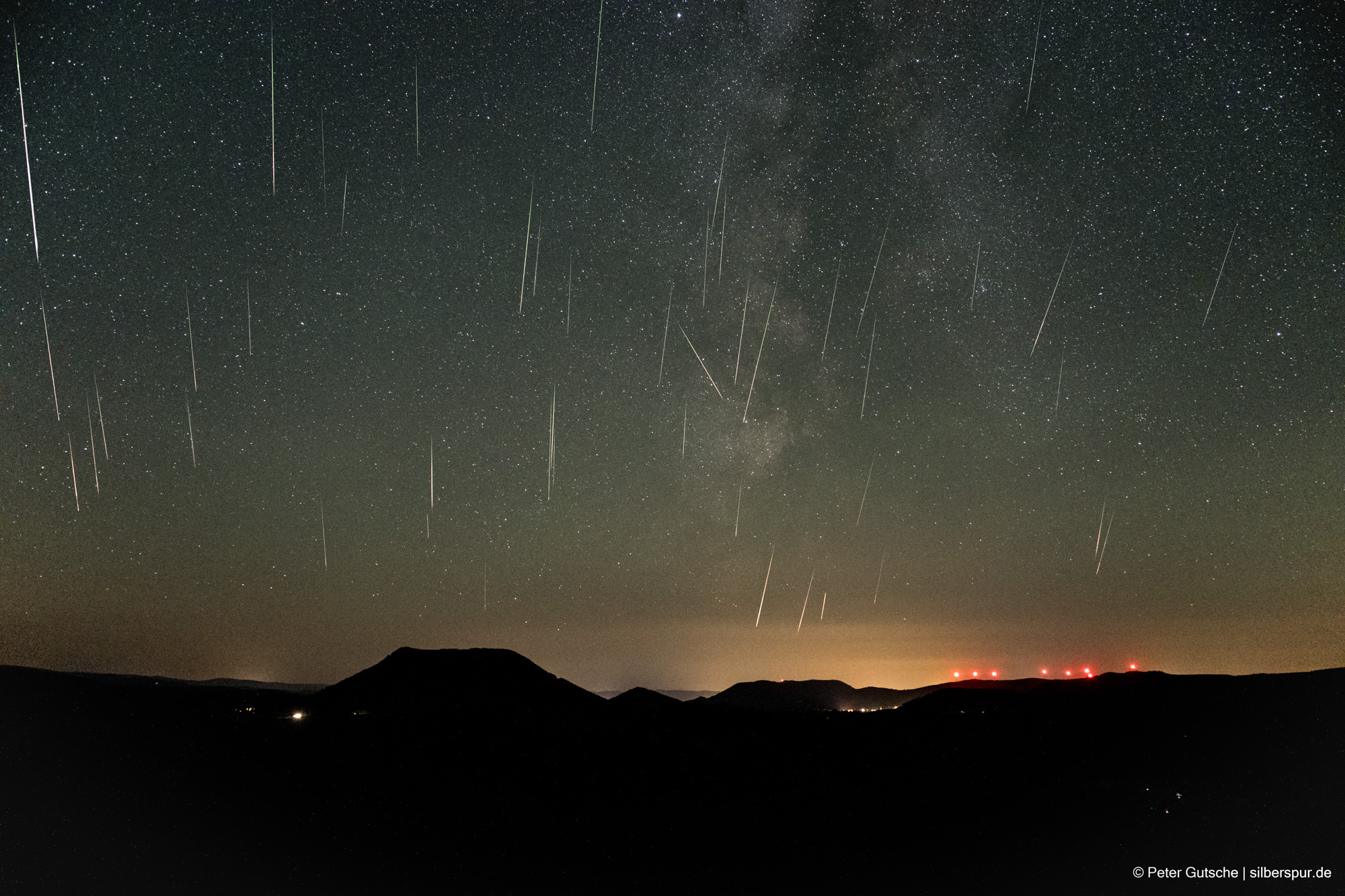
View the image in high resolution here.
The composite combines all meteors observed during this period relative to my ground-based position. To illustrate the radiant in the constellation Perseus (located in the northern sky), the meteors would need to be positioned relative to the star field. Since the camera was pointed south, the meteors in the image appear to descend from the north. (Learn more)
Sound landscape
You can immerse yourself in the acoustic atmosphere (Learn more) of that night here.
Timelapse videos
The following timelapse videos cover a period of about 170 minutes, respectively. The light flashes that fall into the picture from above (from the north) are meteors. The other, fast moving objects are planes and satellites.
I recommend watching the time-lapse films on a (large, if available) screen.
Timelapse of the night of August 12–13 (in the second half of the night)
During the following night, only a few meteors show up:
Timelapse of the night of August 13–14 (in the first half of the night)
Anyone familiar with the night sky will recognize the constellation Scorpius in the second time-lapse, slowly setting behind the Climont.
The following timelapse was recorded during the night between August 13 and 14 (in the first half of the night) using an extreme wide-angle lens (8 mm) and impressively shows the heavy air traffic (and a few meteors).
I didin't remove the light traces of the planes and the satellites on purpose because I'd like to point your attention to the problem of an increasing influence of human activities on the experience of the night sky – keyword: light pollution.
I have created a small blog series on this, starting with:
The Night Sky as a Common Good - why It won't be dark at night anymore (soon)
Moments captured
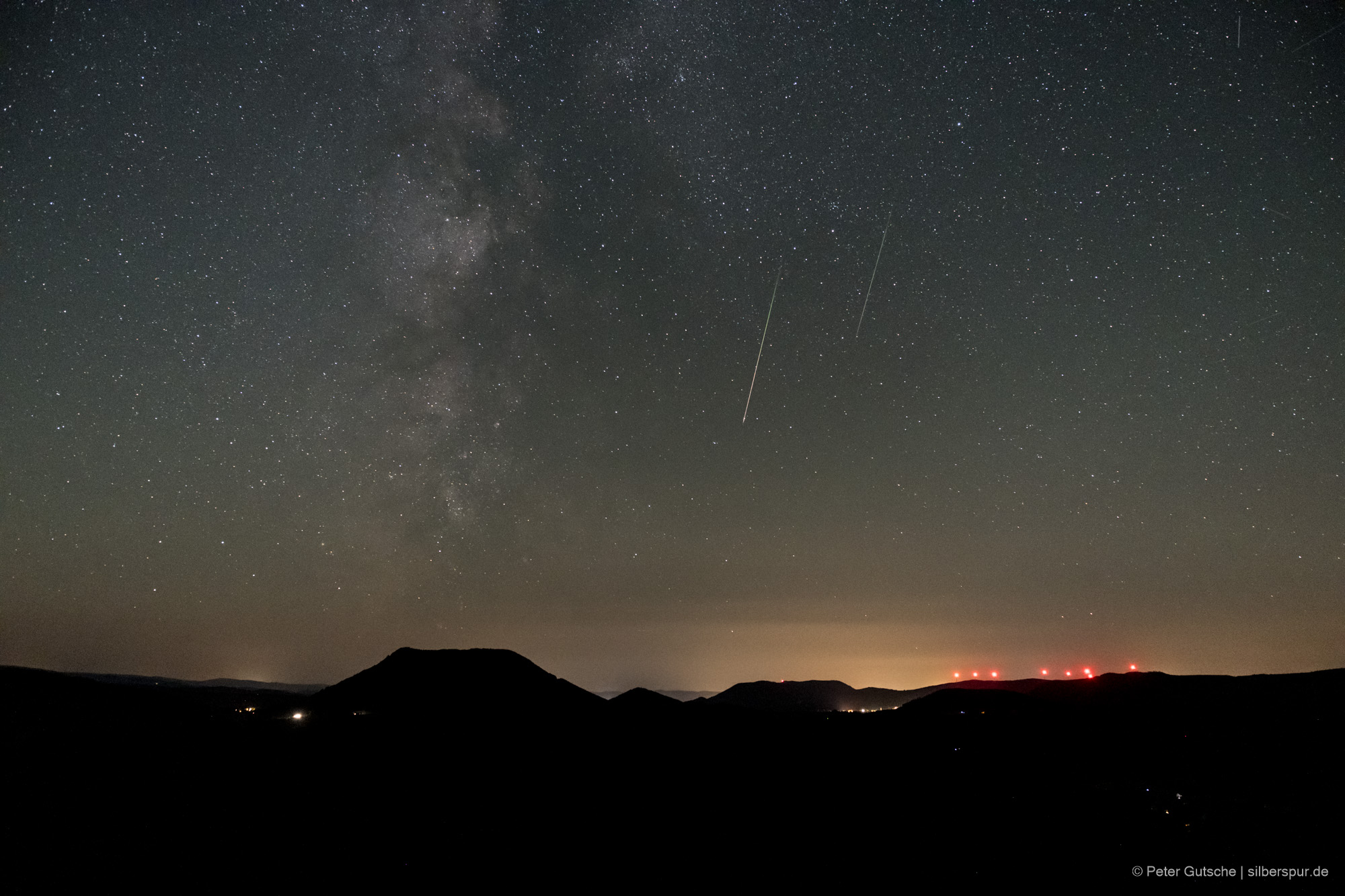
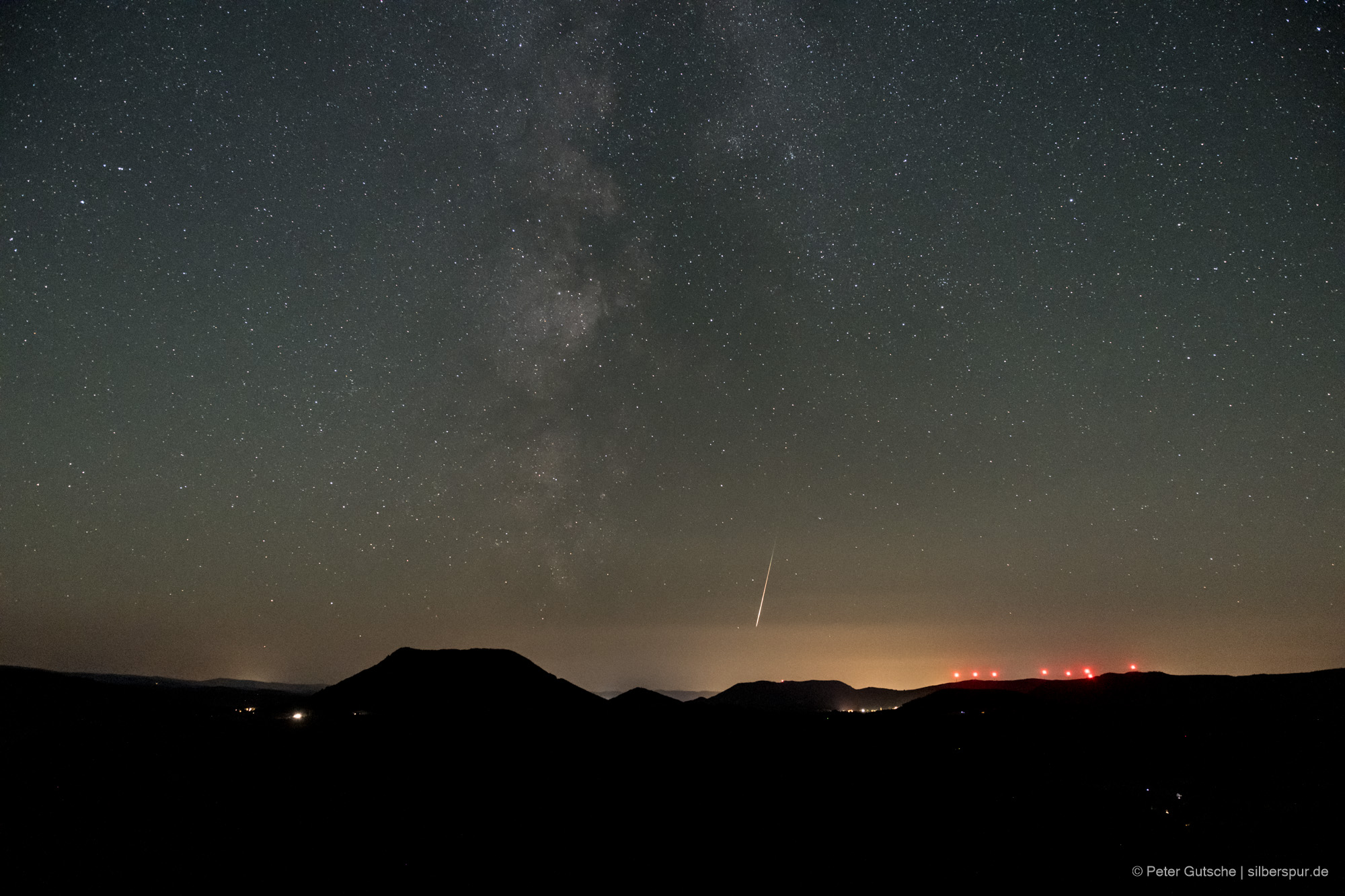
Look at the snapshots of individual shooting stars. (Learn more)
Related Entries


